Horizon
2025
Artist : Graham Kelman
Graham Kelman Studio
Proposal Fabrication Partner : BRDG
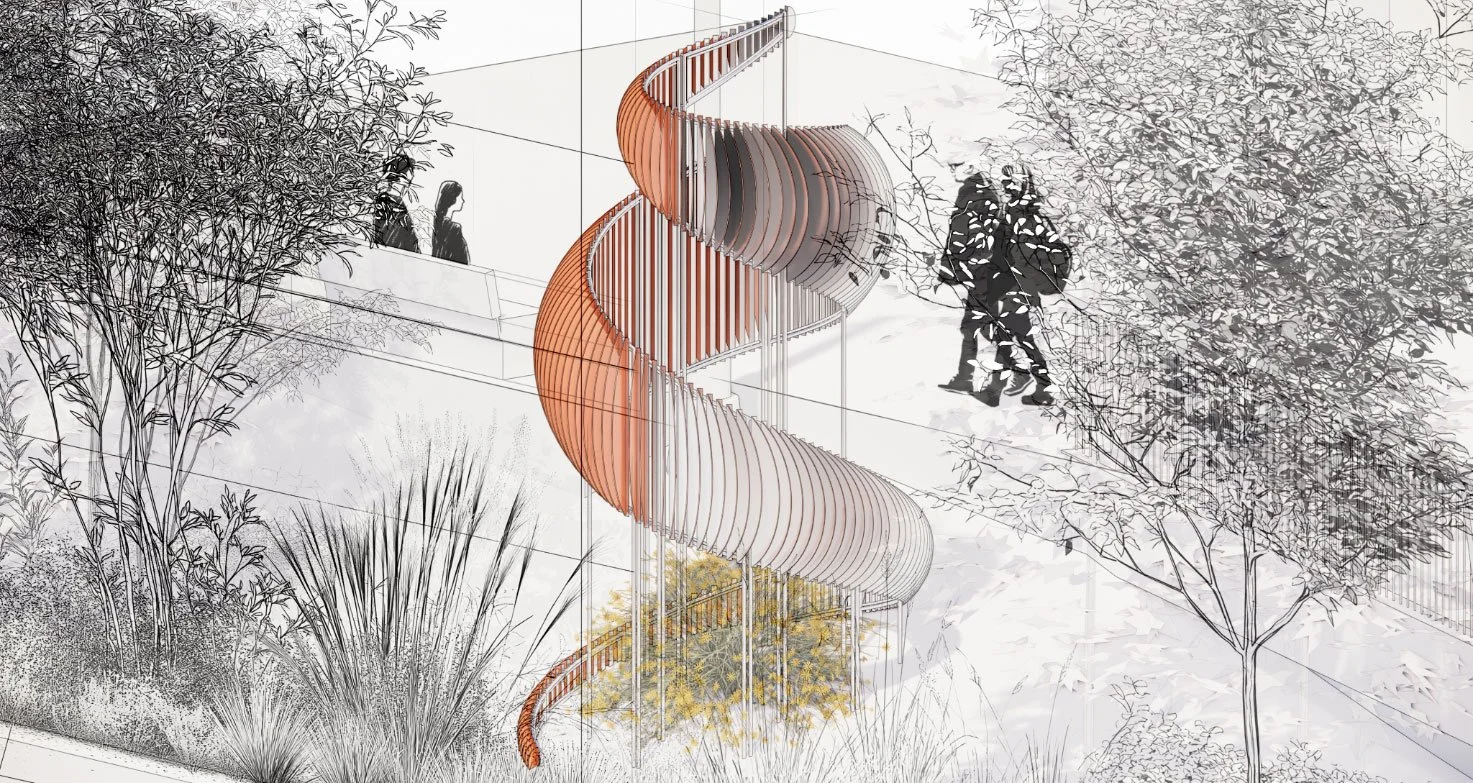
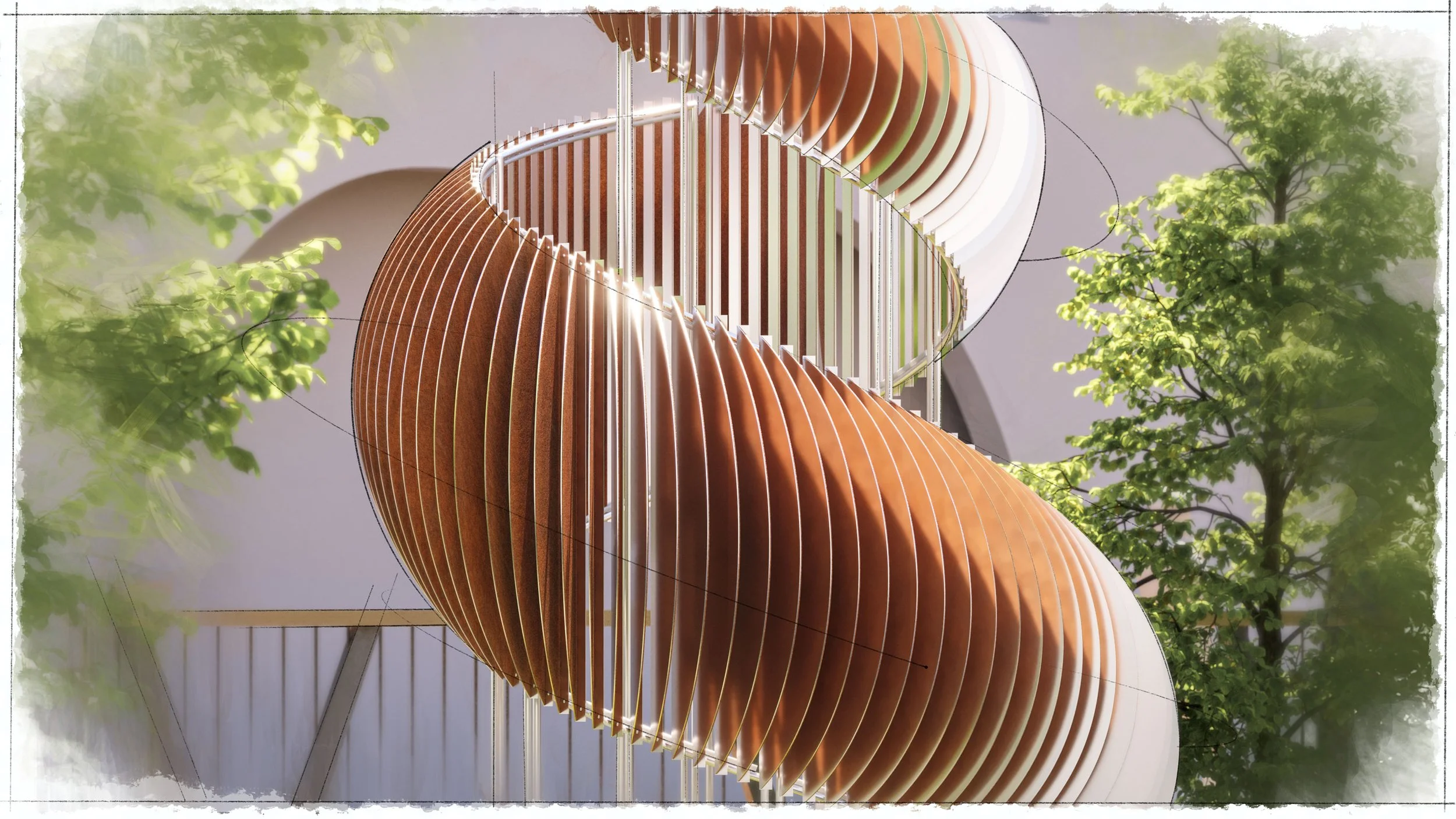
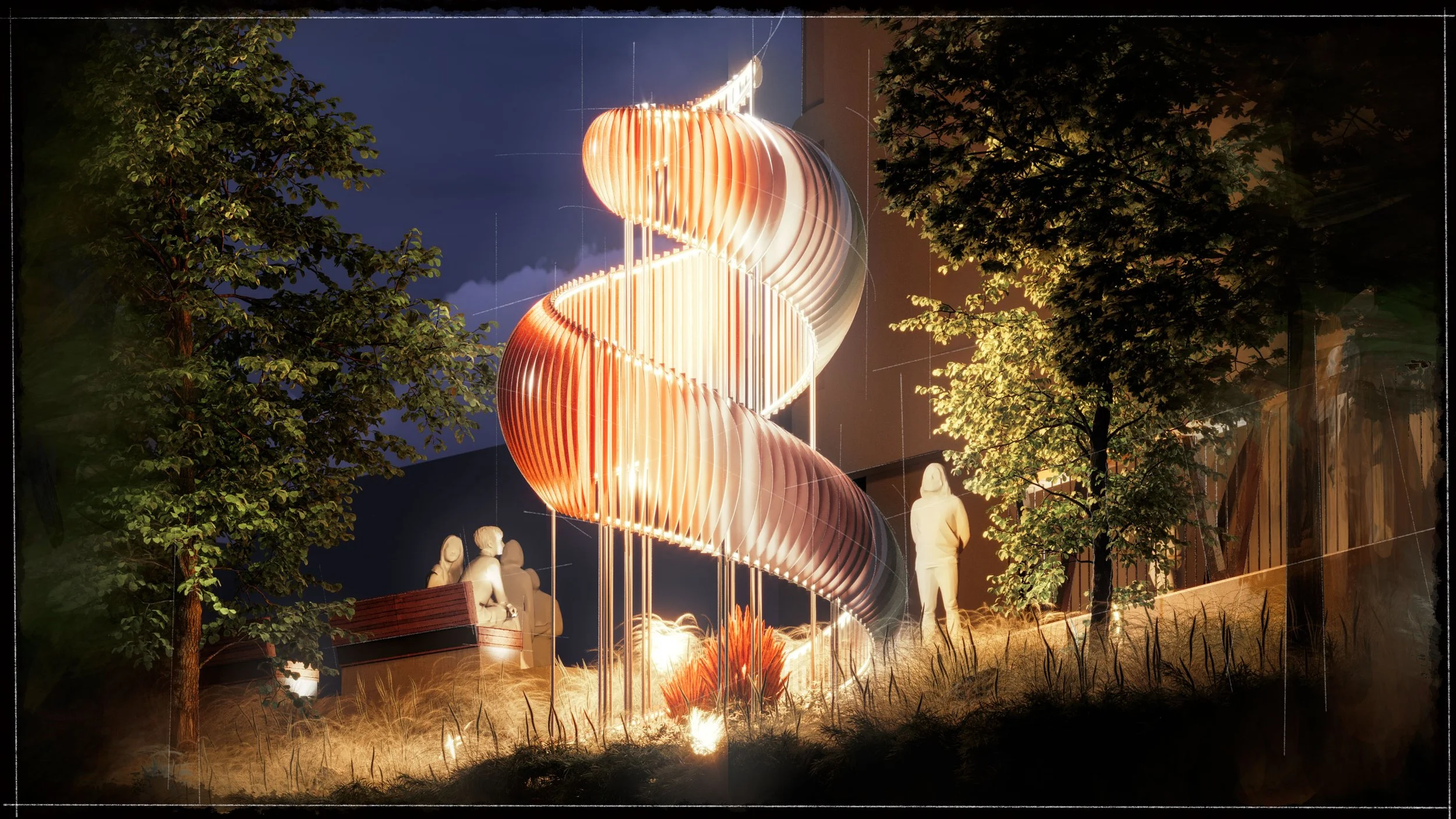
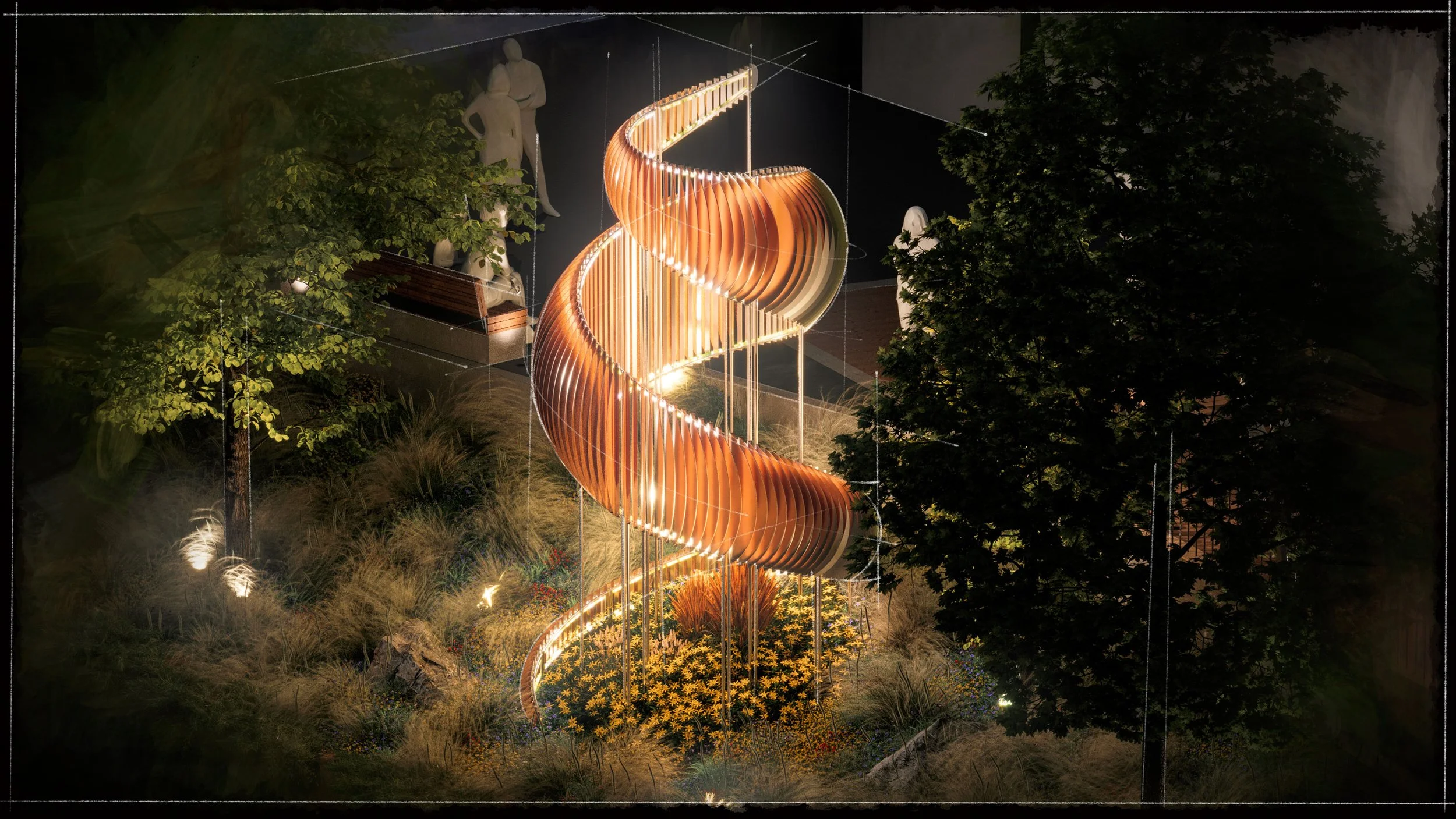
Horizon is a site-specific architectural sculpture proposed for Nevins Landing along the Gowanus Canal. Rising from the landscape in a sinuous spiral, the work establishes a dialogue between the neighborhood's industrial heritage and its ongoing transformation, using alternating bands of Coreten steel and polished stainless steel to reflect both the physical surroundings and the evolving identity of Gowanus.
The Design Process
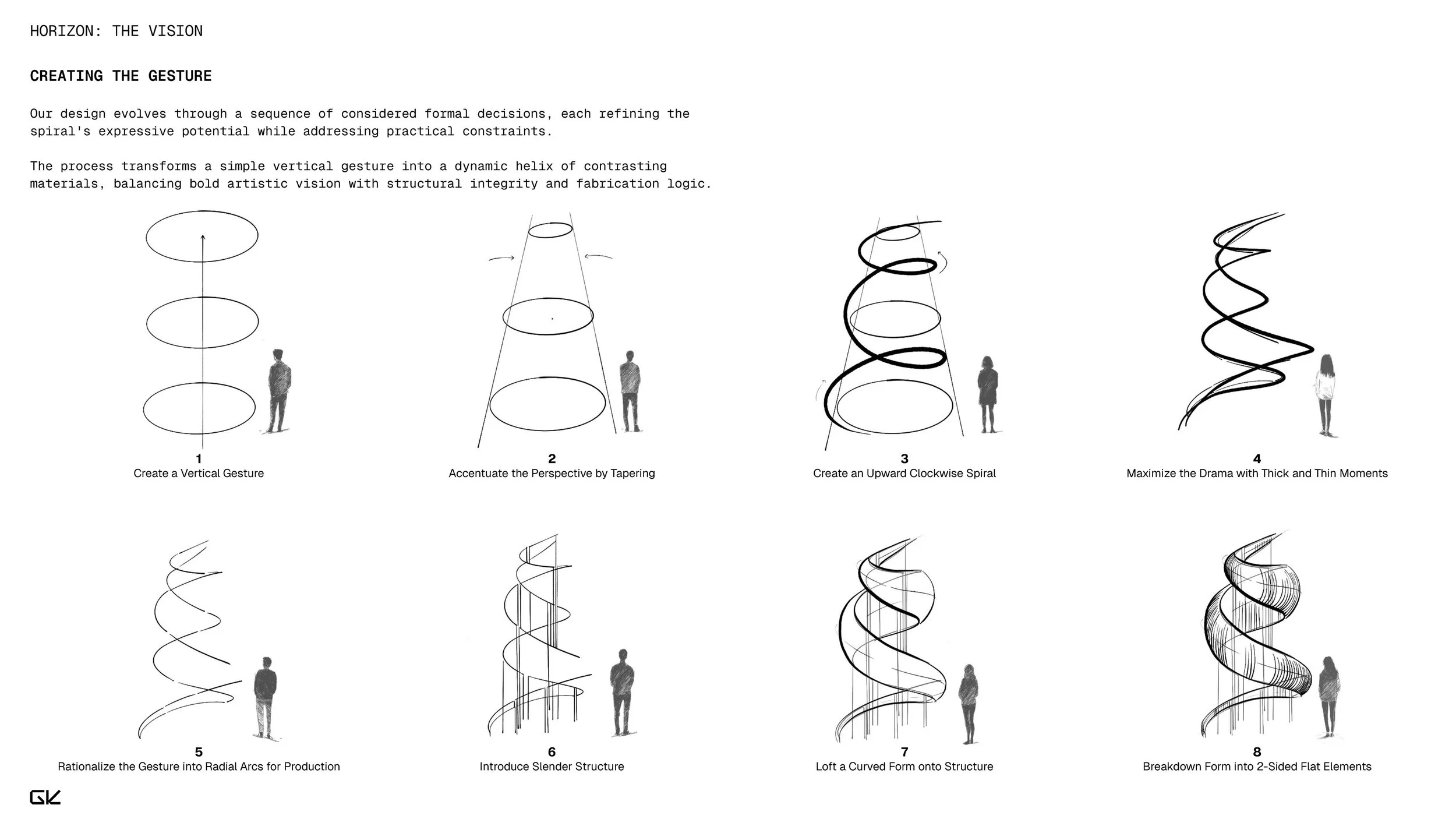
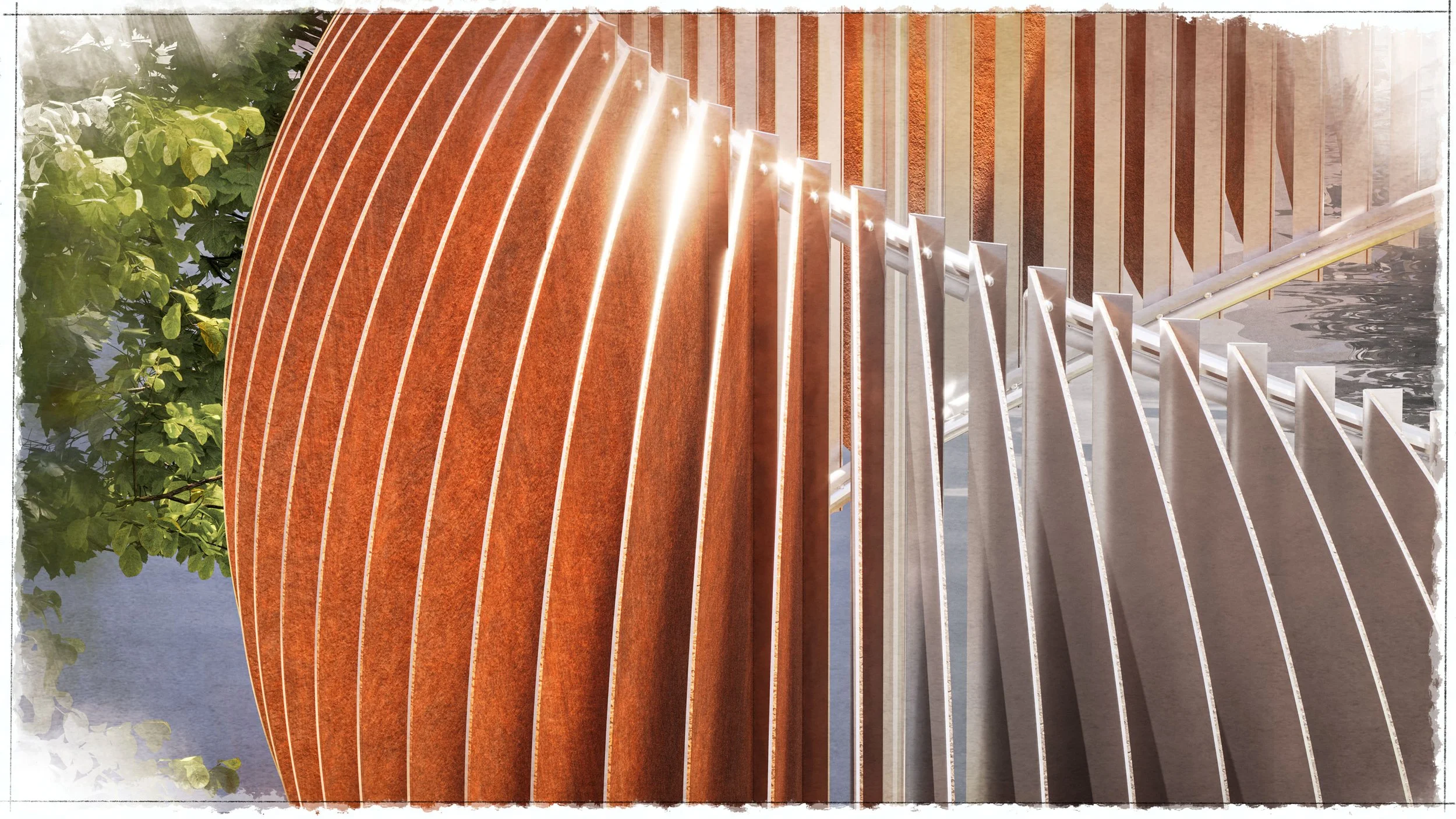
The form was shaped through a deep iterative process: sculptural studies, environmental modeling, and careful analysis of sitelines, movement, and material performance. Every detail—from the taper of the spiral to the moiré effect between vertical fins—was calibrated for presence, transparency, and transformation. The design team worked fluidly across conceptual and technical realms, allowing engineering constraints and artistic intuition to inform one another in equal measure. The result is a form that feels inevitable in its setting, yet constantly surprising in its experience.
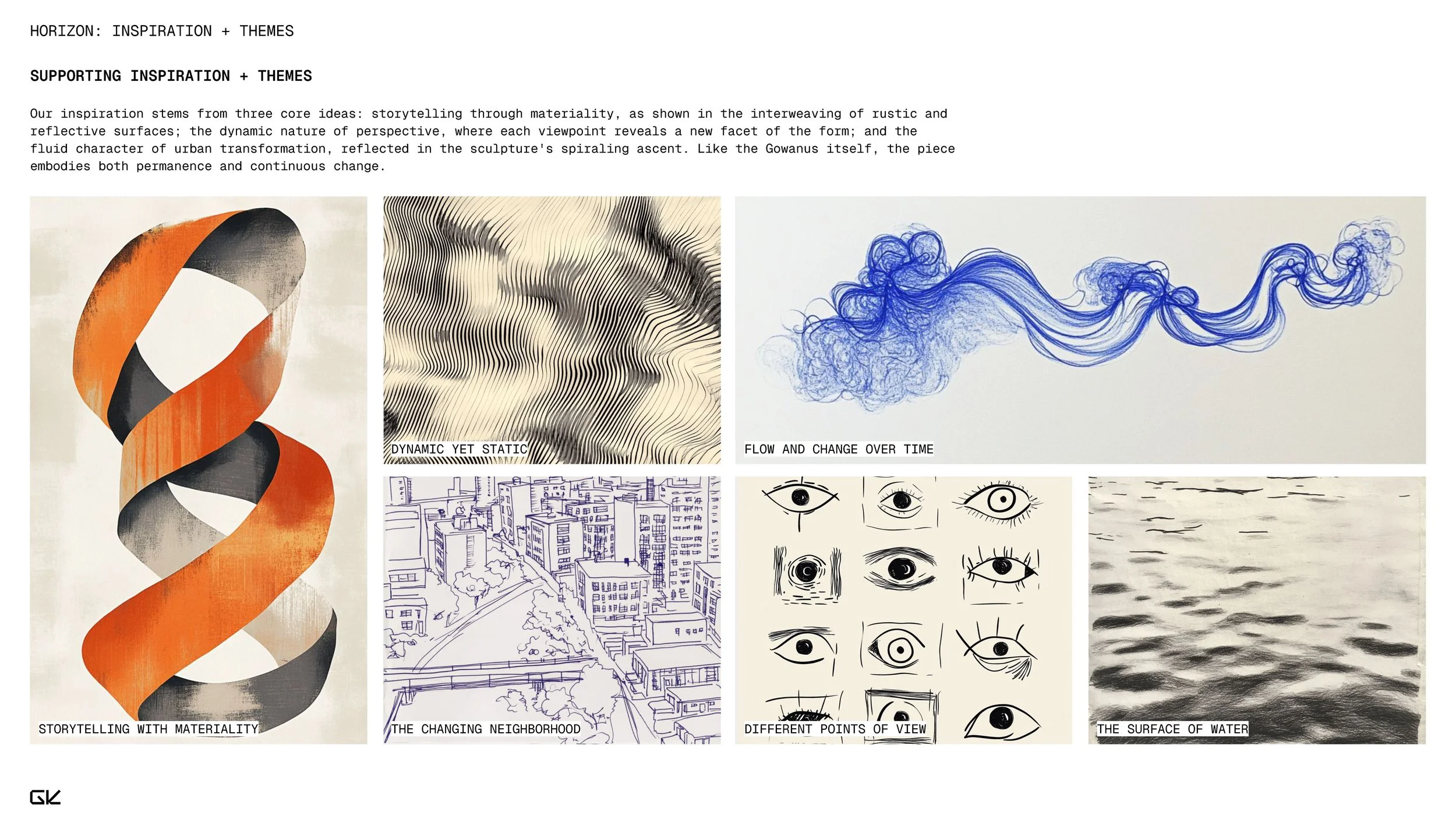
Inspiration + Themes
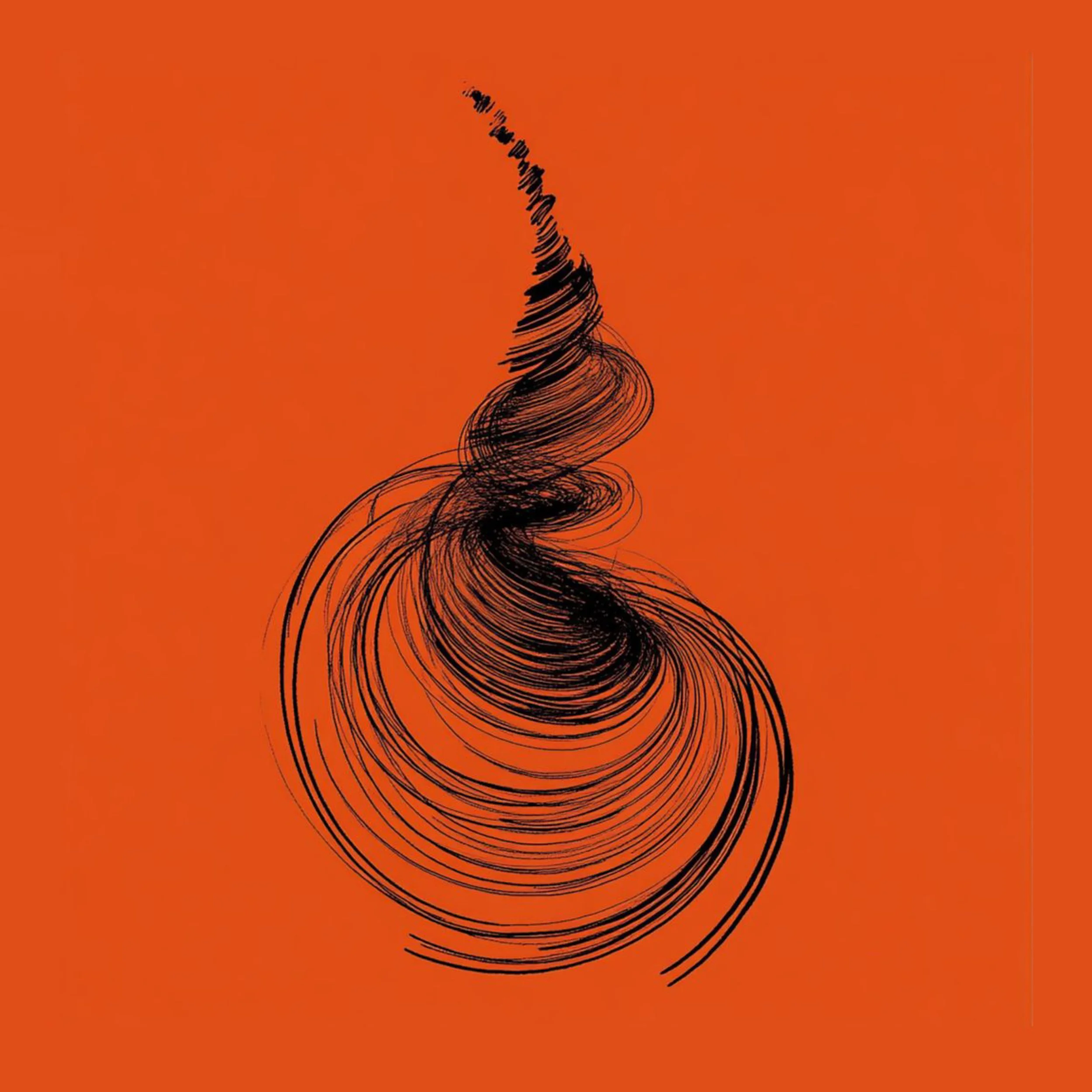
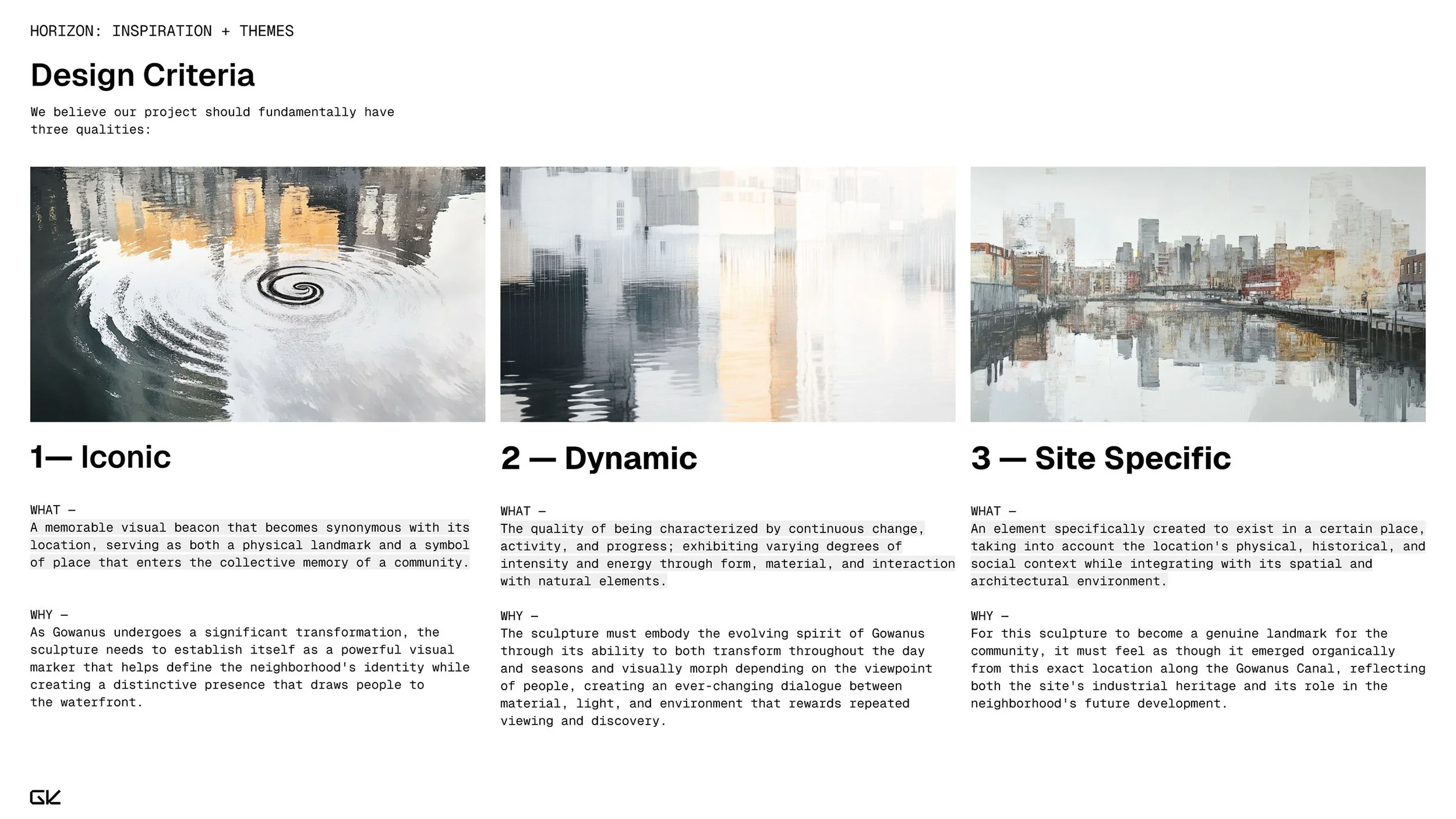
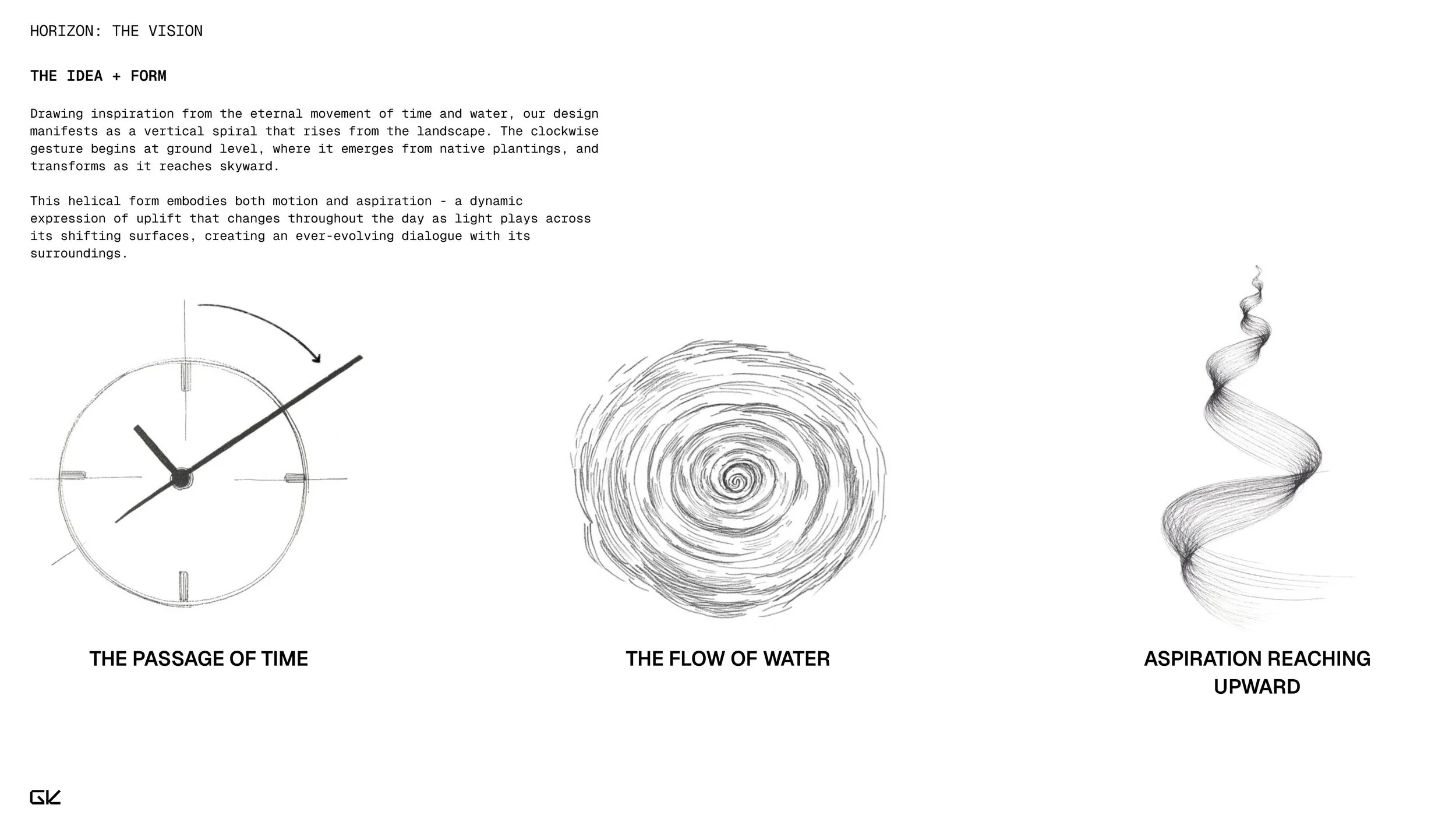
Horizon is rooted in the dualities of Gowanus: old and new, natural and constructed, raw and refined. It draws from industrial typologies—pipes, gantries, scaffolds—but abstracts them into a fluid, upward gesture inspired by the flow of water and the passage of time. The juxtaposition of oxidized steel with mirrored stainless speaks to memory and renewal—inviting viewers to consider what remains, what reflects, and what emerges next. Themes of aspiration, movement, and environmental responsiveness run through every element of the piece, making it a living register of the canal’s continued evolution.
Parameters + Site Conditions
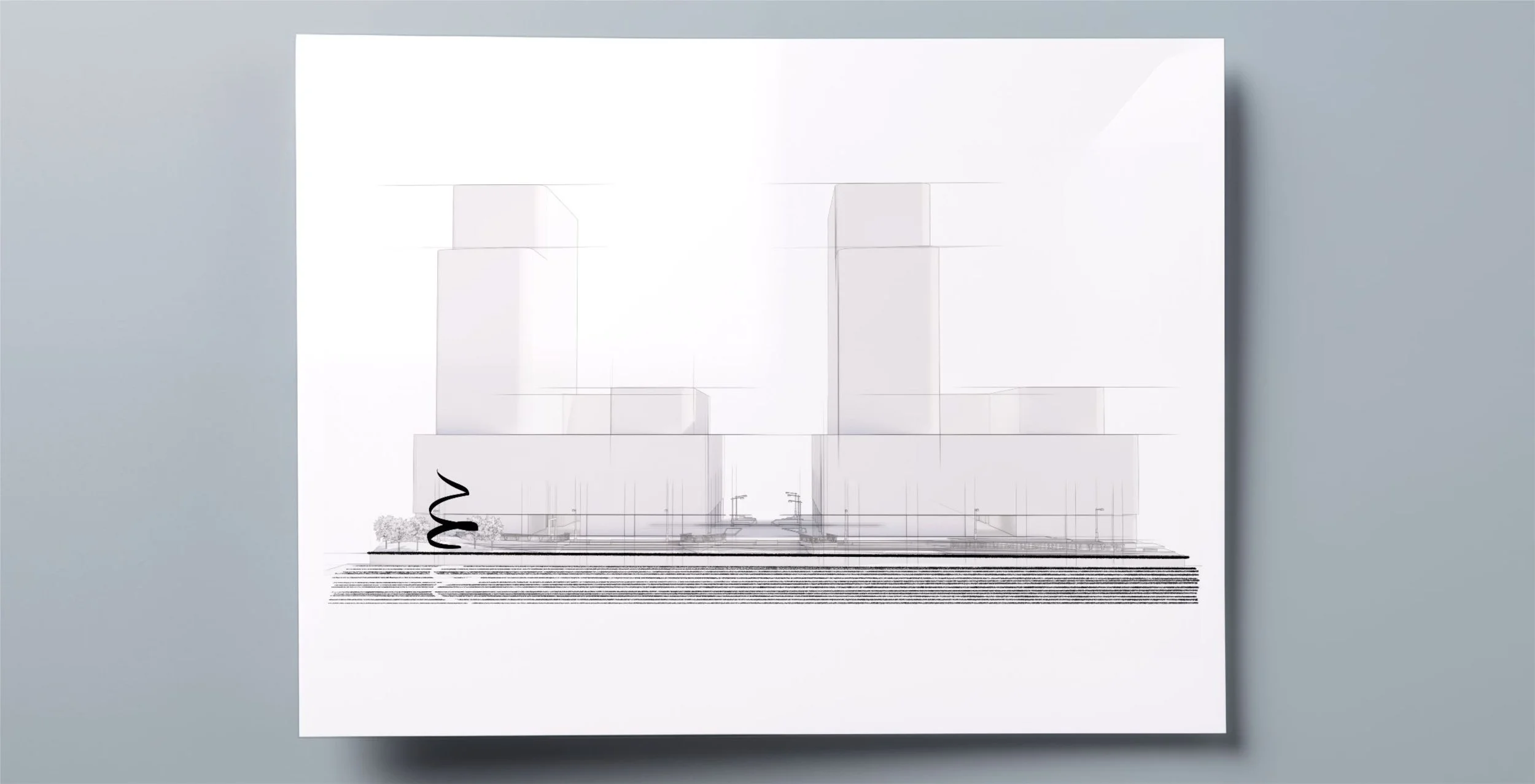
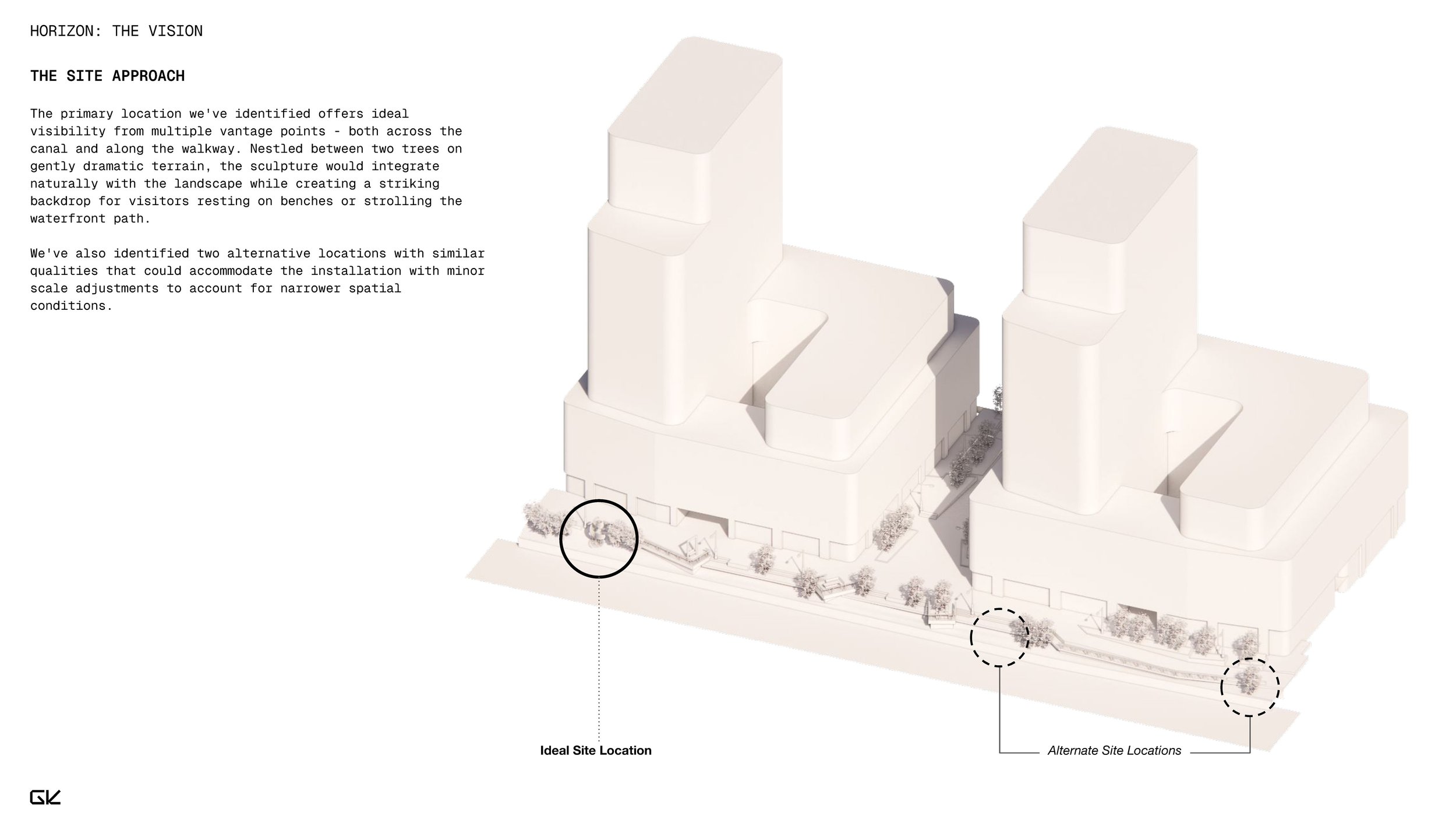
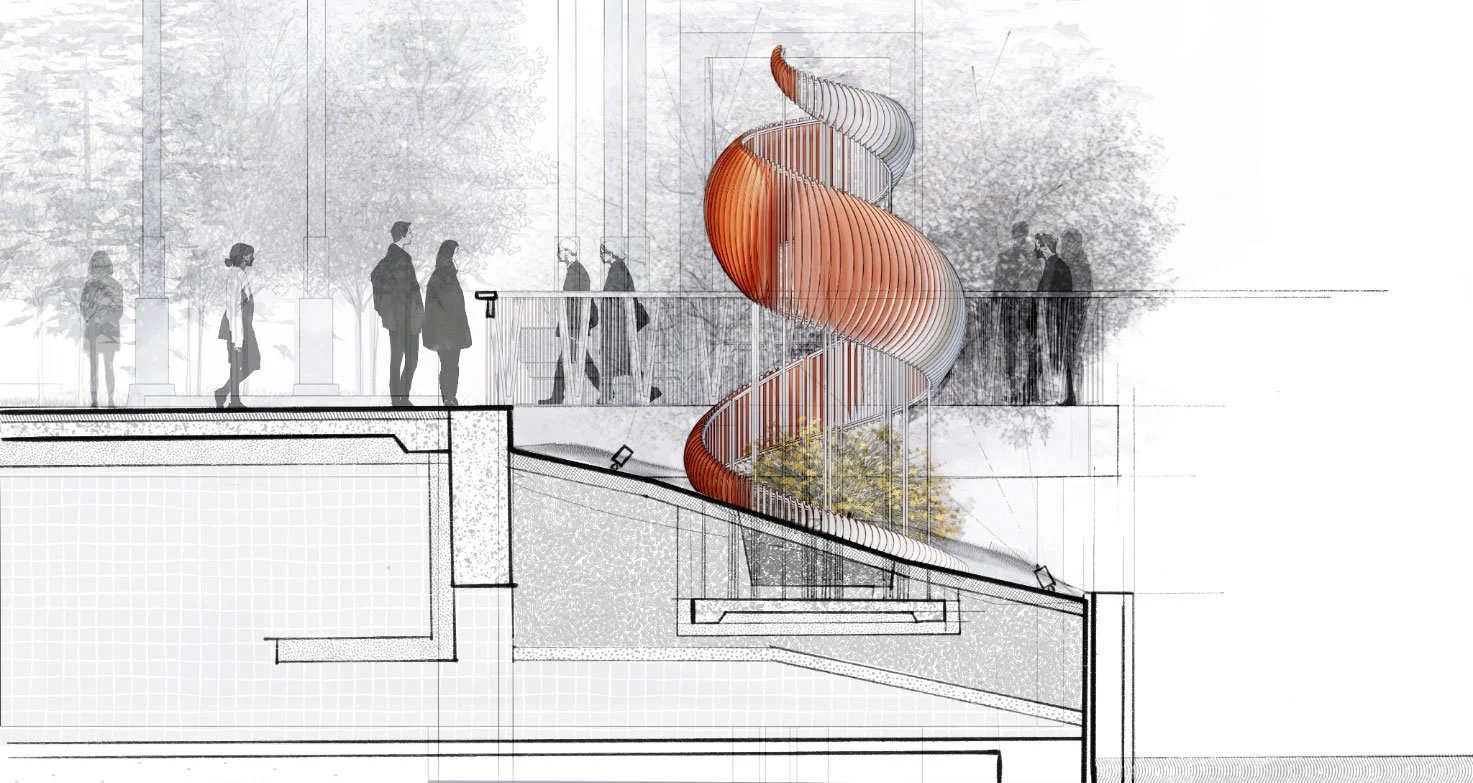
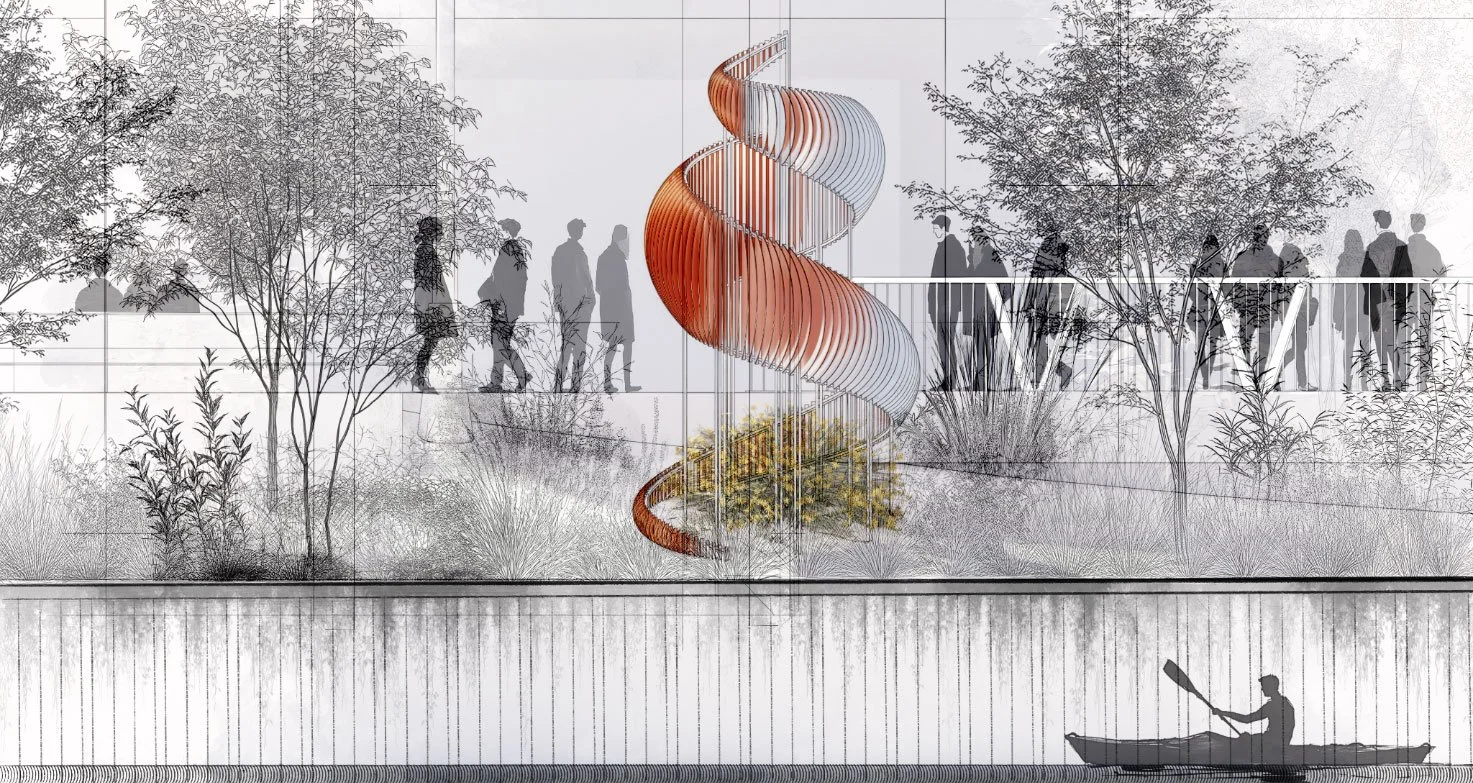
Sited along over 450 feet of unobstructed canal frontage, the proposed location is both ecologically sensitive and highly visible. The sculpture’s form integrates directly into the landscape, coiling up from native plantings while respecting existing pedestrian flow, sightlines, and the shoreline esplanade design. Engineered to meet maritime durability standards, the piece uses perforated structural fins for wind permeability and visual porosity, while a robust foundation ensures long-term stability with minimal maintenance. The changing grade and open exposure shaped the vertical gesture—allowing the sculpture to both anchor and lift the experience of the site.
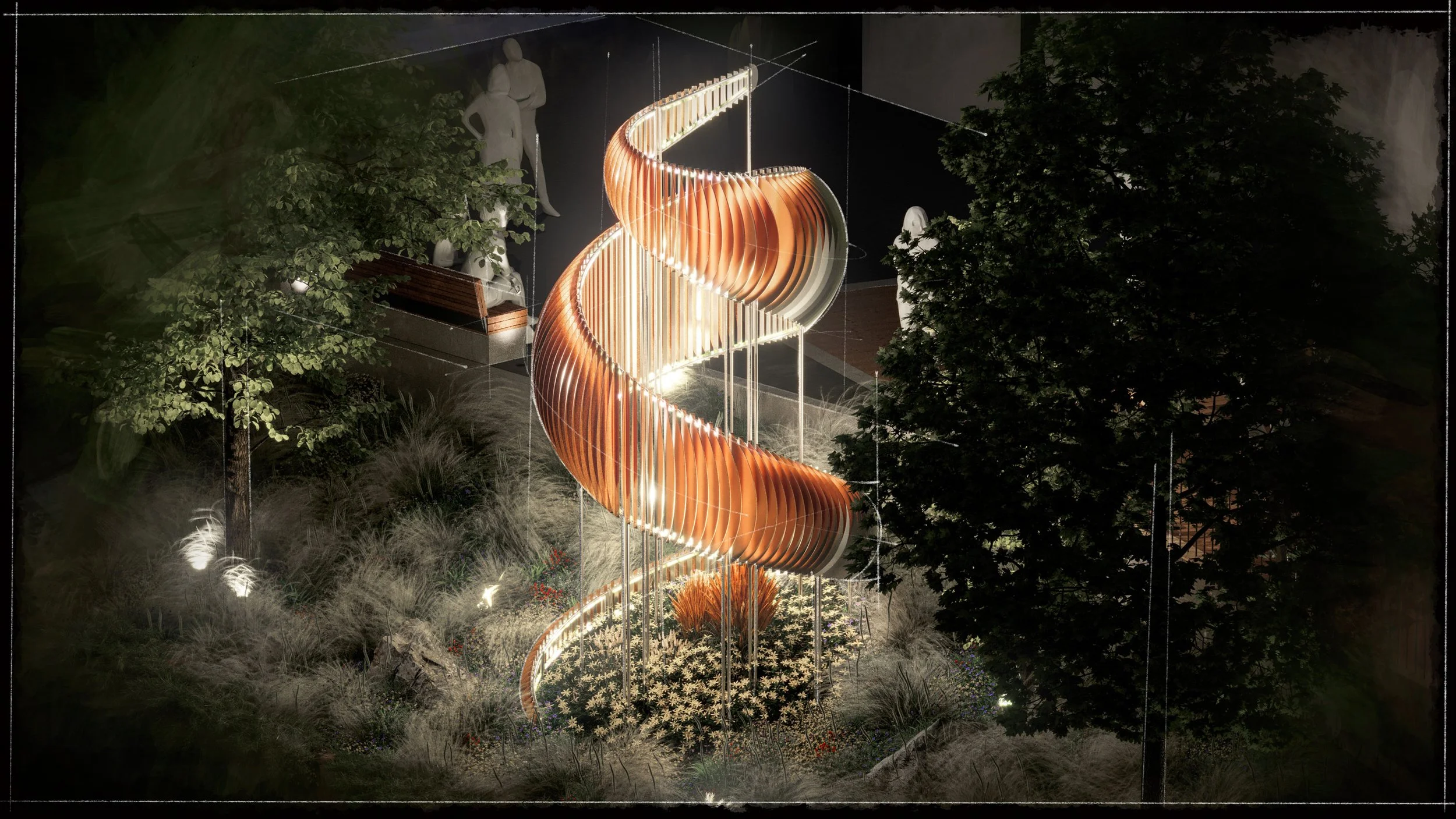
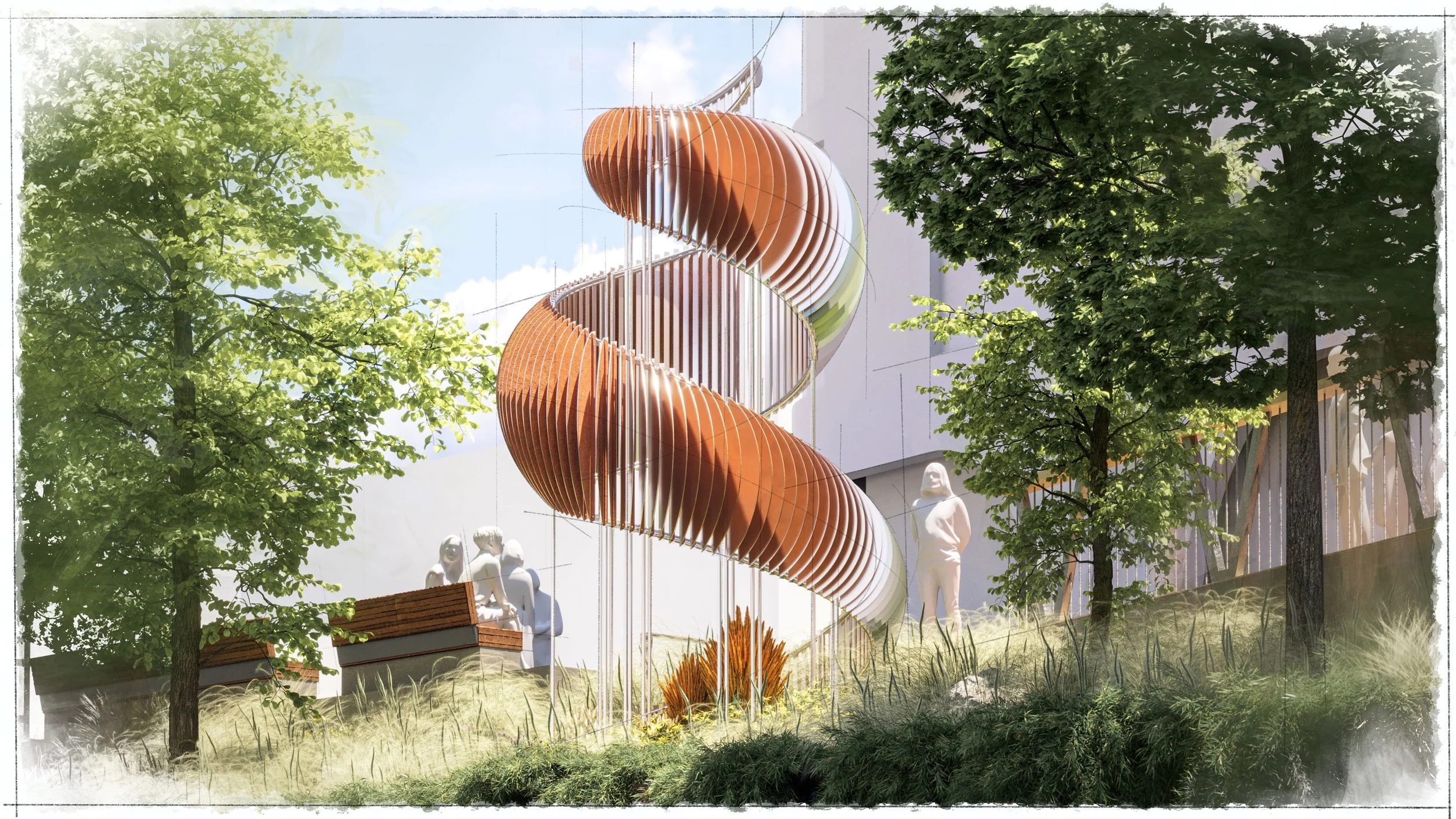
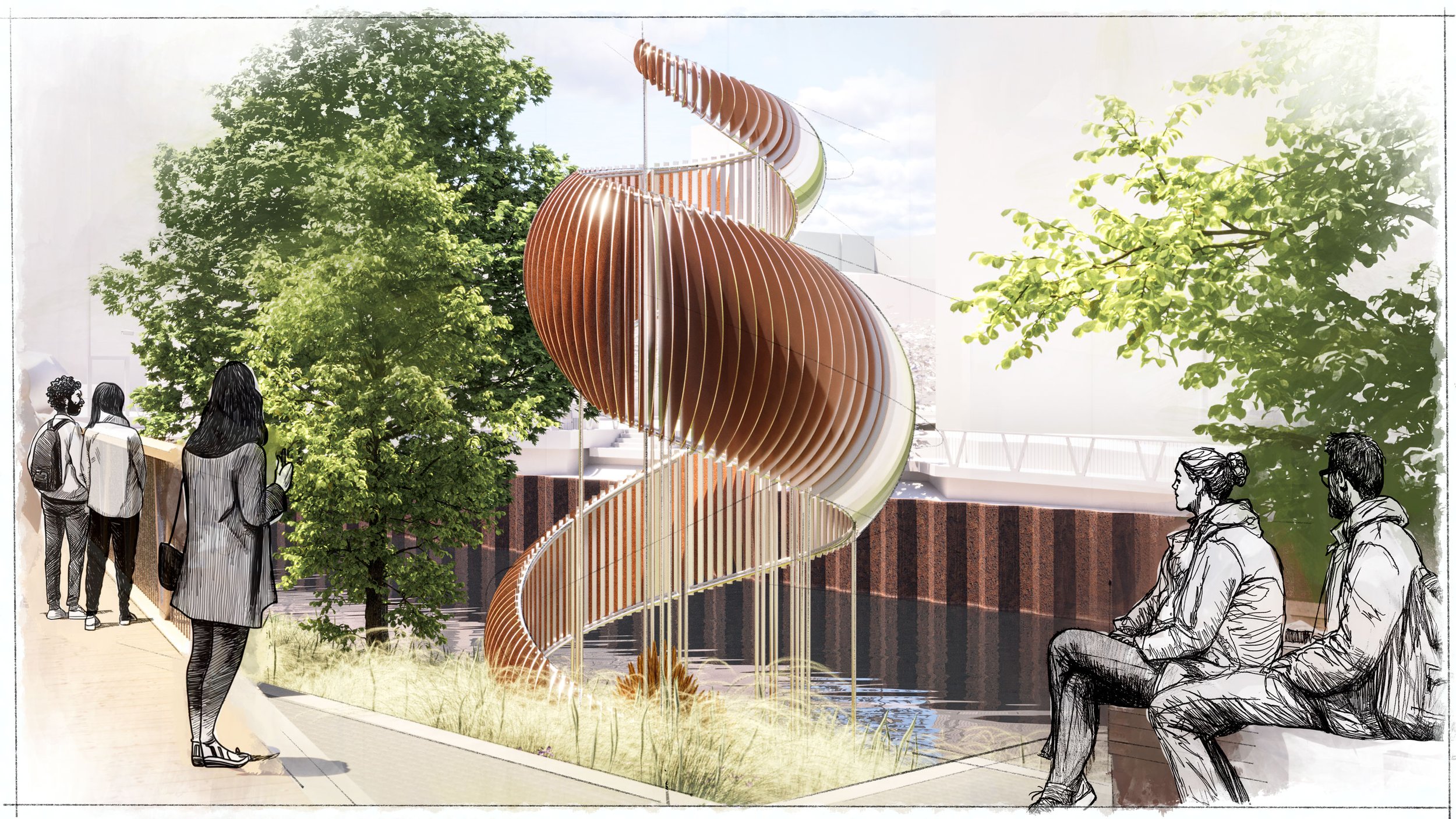
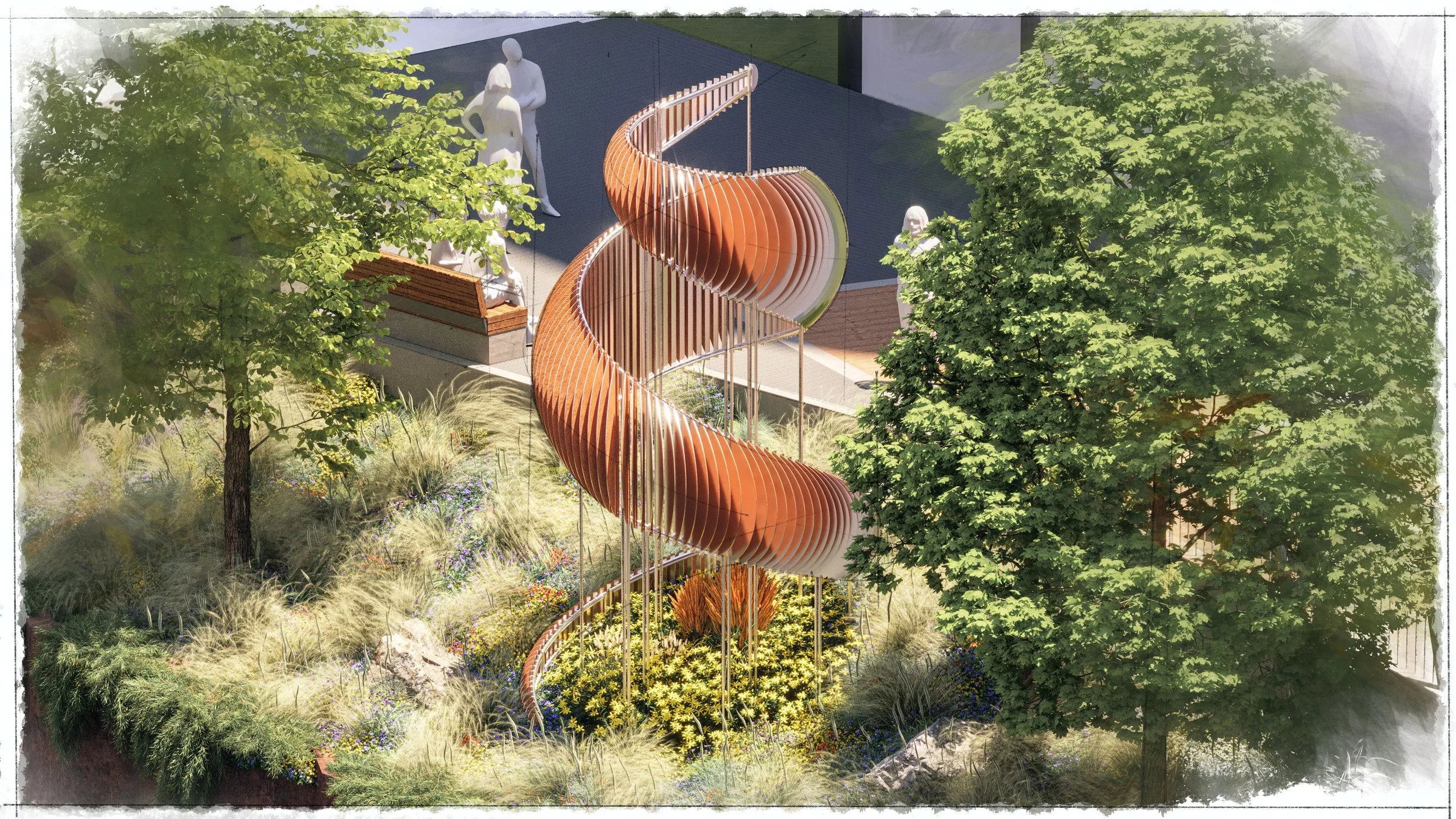
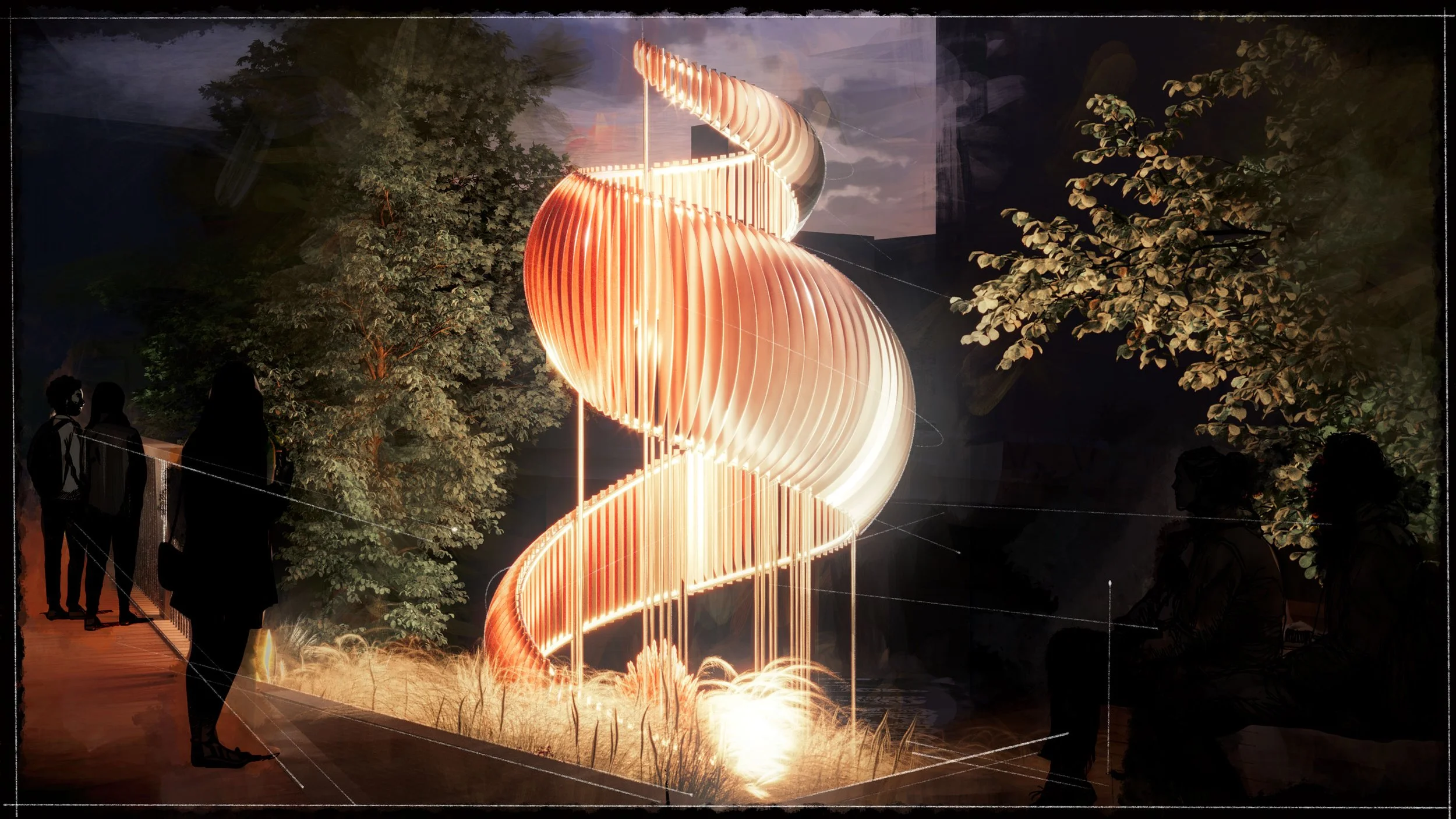
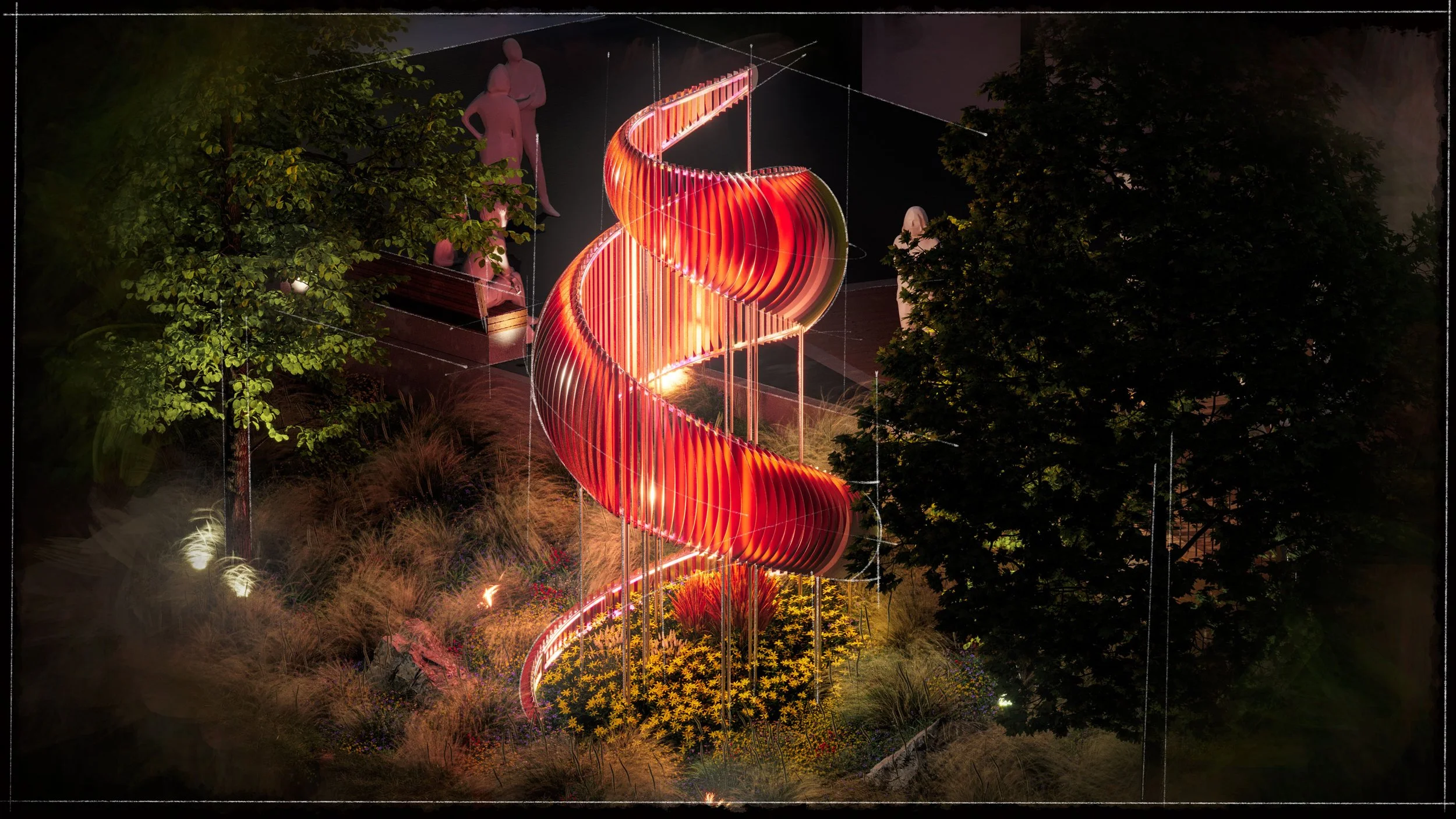
Horizon is a living monument to the spirit of Gowanus—dynamic, layered, and evolving. During the day, it fragments and reframes its surroundings; at night, it glows with subtle, responsive lighting that reflects tides, seasons, or community events. Its dual-material construction creates a physical and symbolic gradient—from the roughness of the past to the polished surface of what’s next. More than a sculpture, it is a civic marker, a visual barometer, and a catalyst for conversation—a presence that rewards repeated visits and offers new meaning each time.
Night + Day
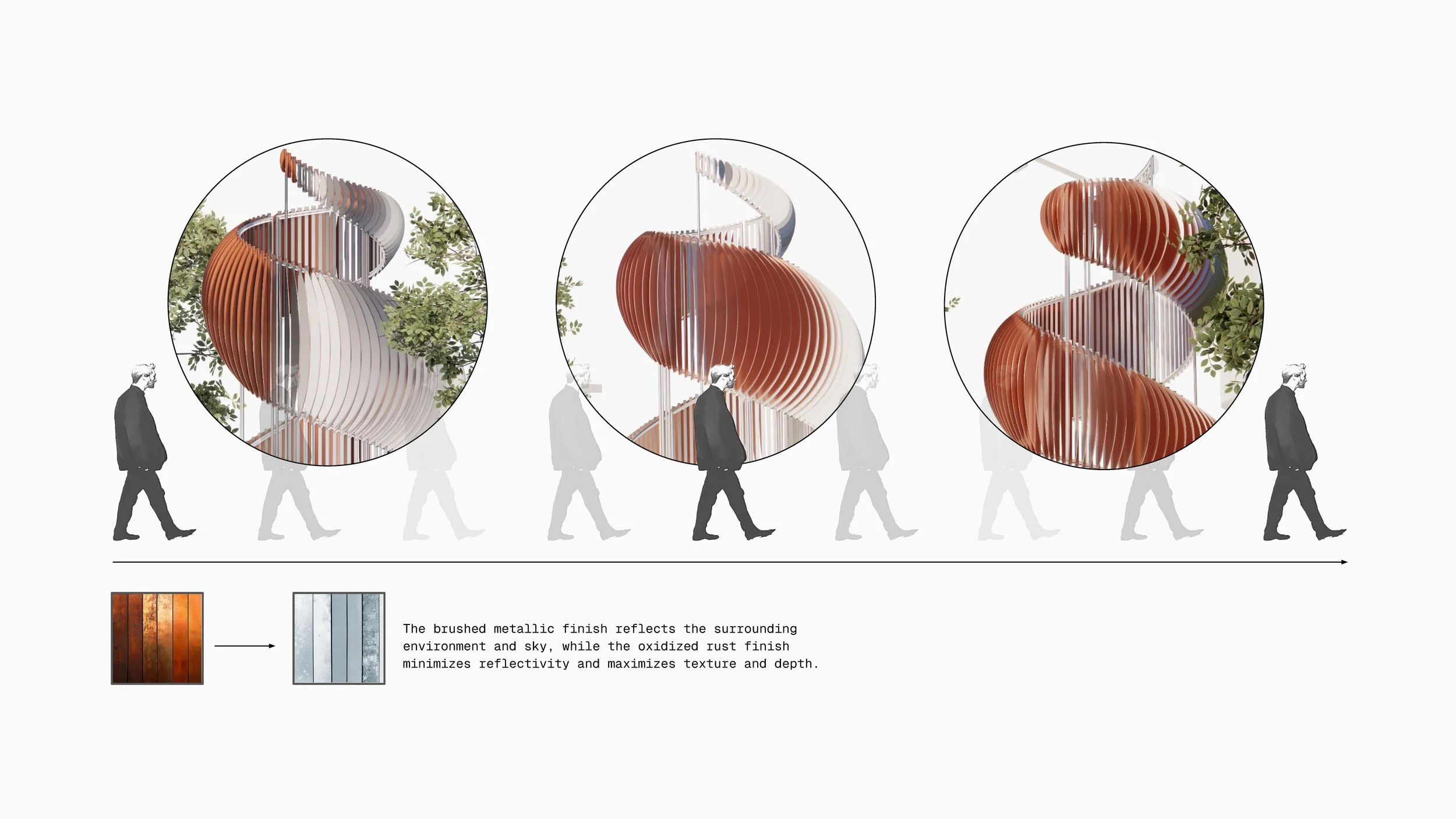
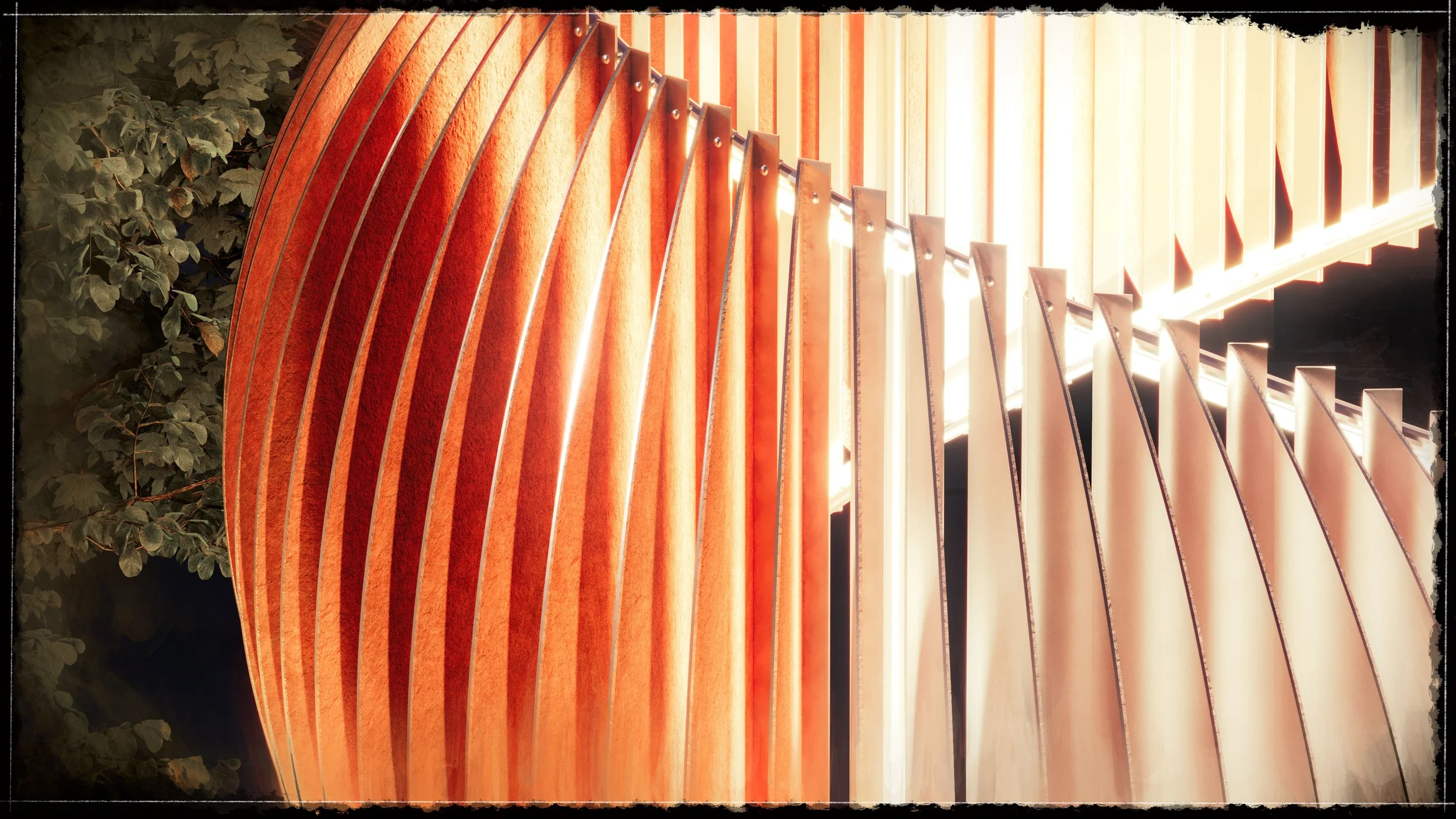
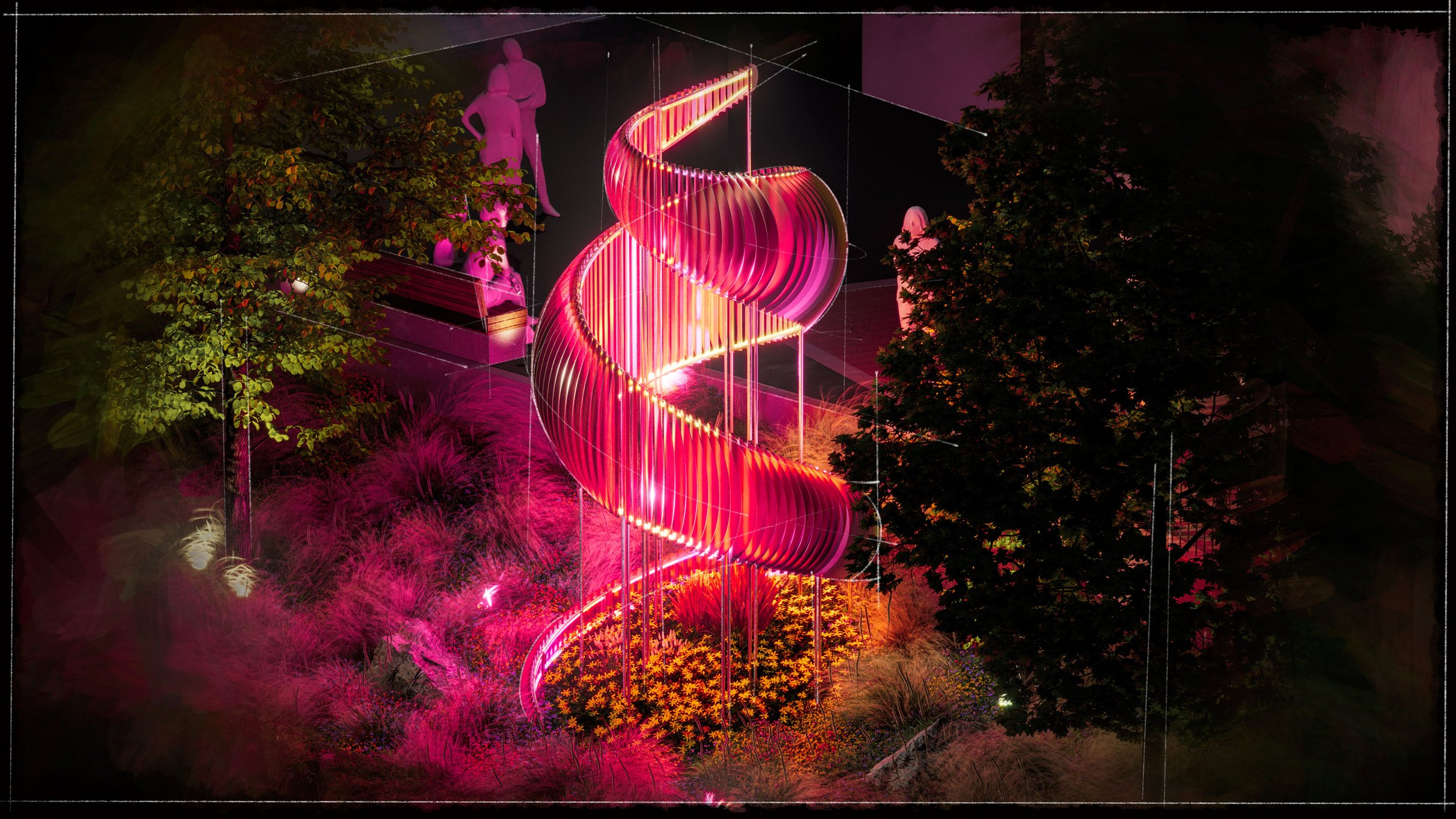
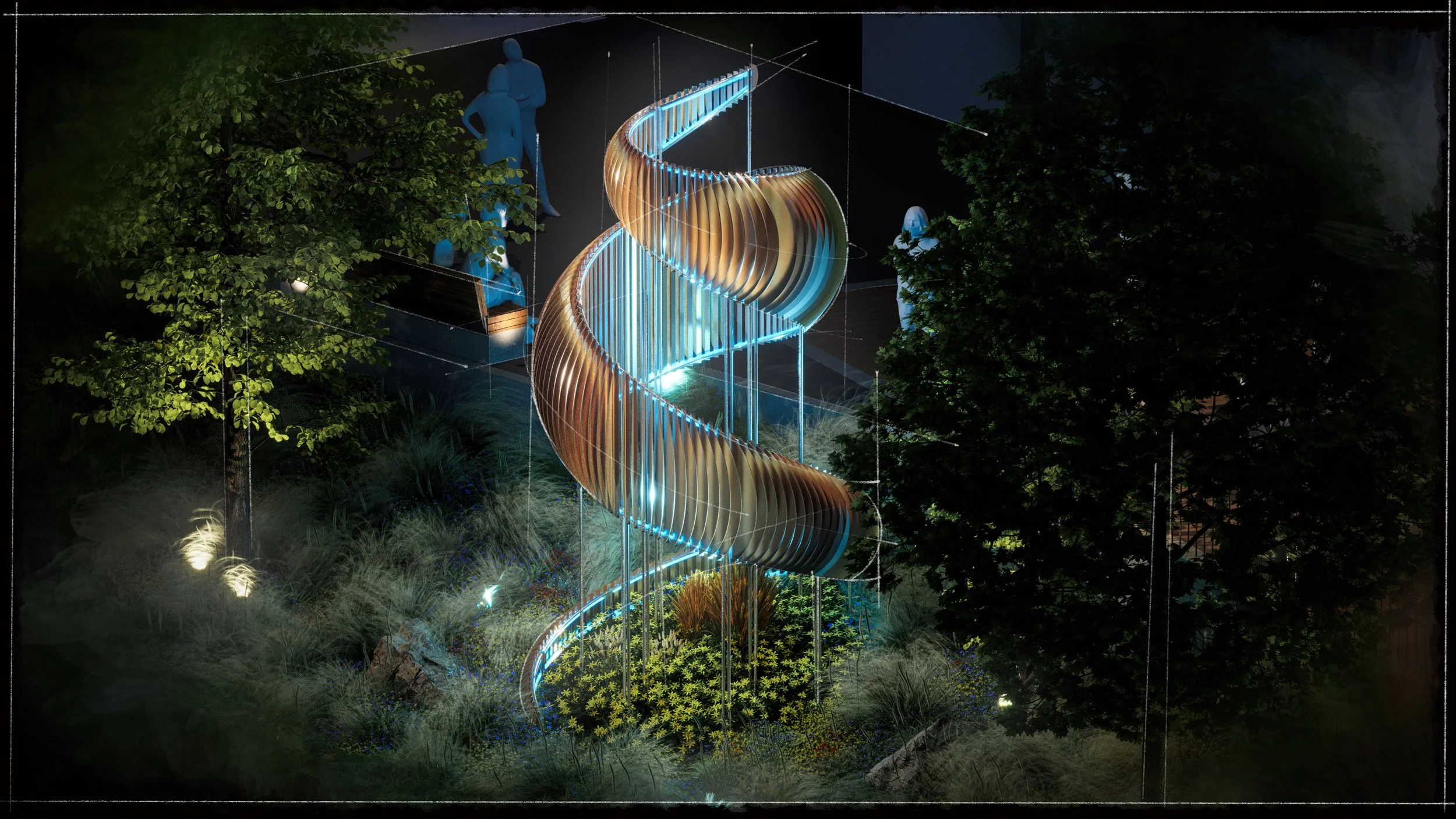
By day, HORIZON behaves like a responsive skin—capturing weather, movement, and light in real time. Its mirrored surfaces reflect the canal, city, and sky; its oxidized steel absorbs light and casts shadows that shift with the sun. As evening falls, the piece becomes a subtle lighthouse: internal LEDs illuminate the spiral’s contours with programs that respond to environmental data—creating a living connection to local rhythms. Whether glowing softly against the night or dissolving into daylight sky, the sculpture remains in constant conversation with its environment.
Elements + Components
The installation overlays a bold new identity onto the existing tower, turning a standard glass facade into a kinetic architectural landmark. Through light, form, and movement, the building becomes more than a backdrop — it becomes a signature presence in the city skyline.
Materiality
The sculpture is composed of two interlocking material systems: weathered Corten steel and polished stainless steel. The Corten speaks to Gowanus’s industrial past—tough, textured, and patinated by time—while the chrome reflects light, sky, and movement, representing the bright and fluid future of the neighborhood. The gradient between these materials is not just aesthetic—it’s a narrative device, telling a story of erosion, resilience, and reinvention. Together, they create a form that appears to age and shimmer simultaneously, depending on the viewer’s angle and the time of day.